Jadeite Jade Rings and Earrings

Jadeite Jade Rings and Earrings

Jadeite Jade Rings and Earrings : The World of High Jewelry

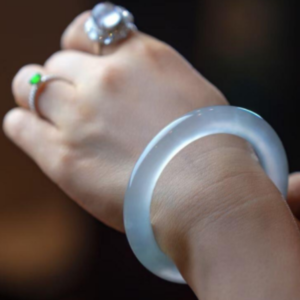
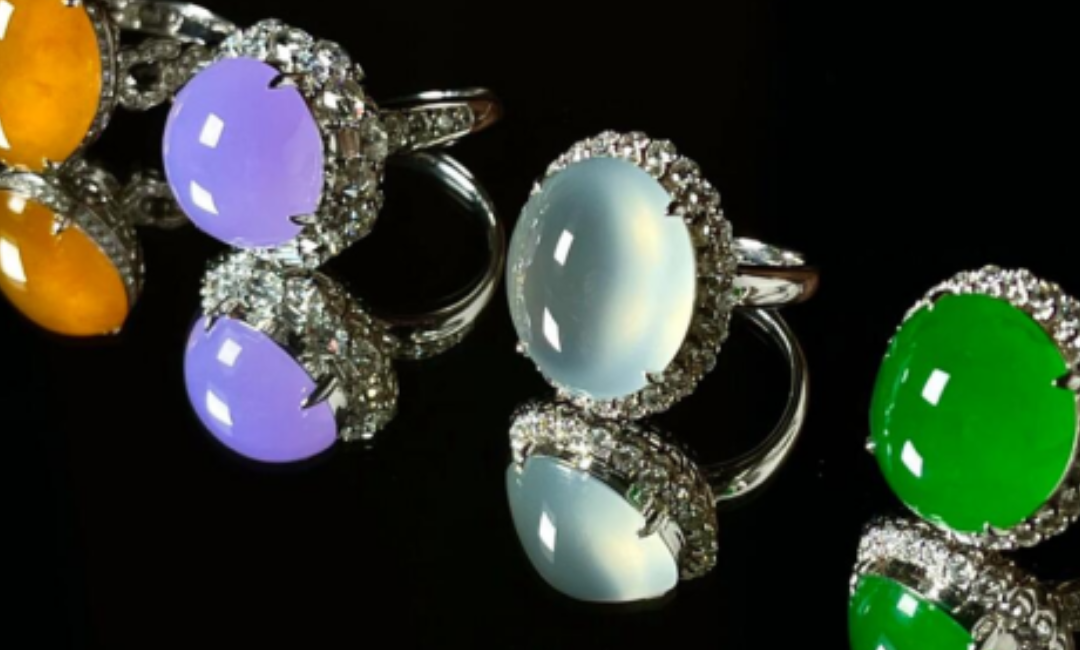
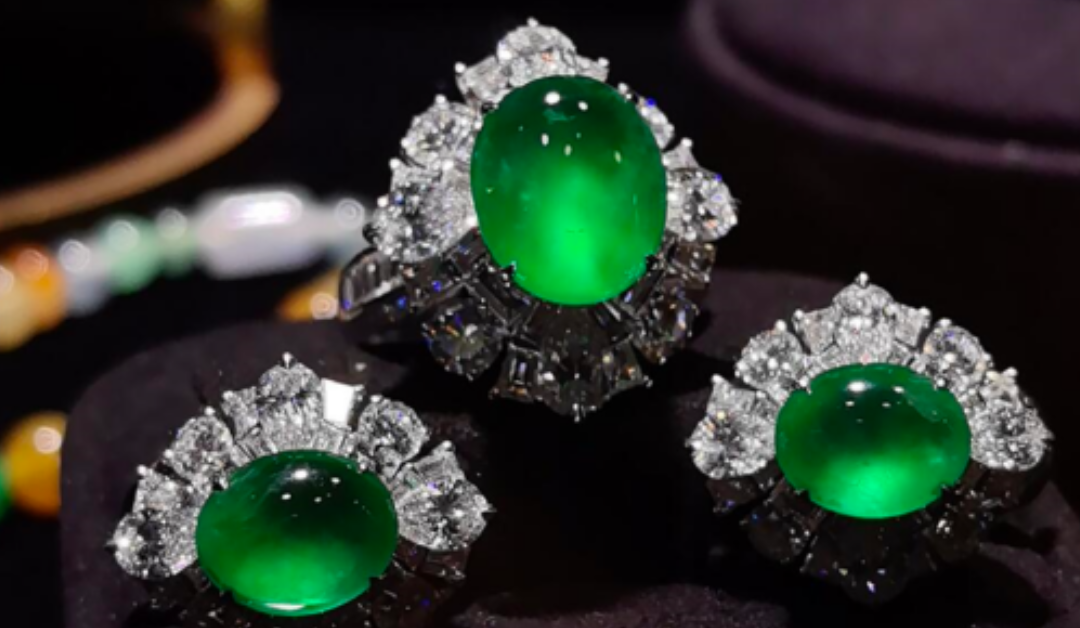
After having your first jadeite bangle, the journey usually deepens into a set of jadeite jade rings and earrings – made from jadeite cabochons.

The jade bangle is intimate and spiritual which connects your soul to natural jadeite, and it stays quietly with you every day. While the jadeite cabochon is something shining. From there, jadeite jade steps fully into the realm of high jewelry. This is where collectors begin to compare, refine, and elevate their tastes and standards.

For serious jadeite collectors who has high budget, a few sets of premium quality jadeite cabochon ring and matching earrings of different colors and styles are a must-have. They represent concentration of color, of structure, of grain and glow, of light, of purity, of rarity, and of value.
Simple in Shape, Extreme in Requirement

A jadeite cabochon looks minimal. A smooth dome. Clean polish. No carving. But this shape is actually one of the most demanding cuts in the jadeite jade world.

A cabochon exposes everything. There is no design to hide uneven color. No carving to distract from flaws. The curved surface magnifies internal texture. Even slight cotton-like structure, faint lines, or uneven grain become visible once polished.

To create a high-quality jadeite cabochon, the rough must contain a concentrated, clean, structurally fine section. Most natural jadeite rough cannot provide this. Large portions are cut away and discarded in order to isolate a suitable area. It must be eye-catching. The yield is extremely low.

For earrings, the difficulty doubles. Two stones must match in tone, saturation, translucency, size, and dome proportion. Finding one beautiful jadeite cabochon is rare. Finding a truly harmonious pair is significantly rarer. This is why fine jadeite cabochon earrings sit firmly within the top tier of jadeite jewelry collection.
What Makes a Fine Jadeite Cabochon?

In the jadeite jade world, collectors focus on four key aspects to evaluate quality and value of a jadeite cabochon. They are color, grain and glow, clarity and cracks, shape and size.

Jadeite’s Color

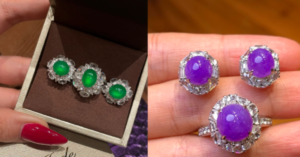
Color is the most immediately perceived attribute of jadeite jade. In evaluating a cabochon, collectors apply the classic standard of "intense, bright, pure, and even" — known in Chinese as "浓、阳、正、匀".

Intense refers to what collectors call "thickness"—the color feels dense and rich, not thin or washed out. But here is the tricky part: if the color is too deep, it can start to look dark and lose its life. The sweet spot is color that is intense yet still bright.

Bright is that lively energy — what connoisseurs describe as "阳" — that makes the stone come alive under light.

Pure means the hue is free from muddy or grayish tints. The famous "imperial green" gets its rich emerald color from chromium—the same element that colors emeralds. Research shows that high-quality jadeite green actually has a slight yellow undertone.

Even means the color is uniformly distributed across the smooth, curved surface of the cabochon. Any color zoning or blotchiness is easily visible and affects the overall quality.

When collectors assess a jadeite cabochon’s color, they look at how well it performs on these four dimensions — whether it is a deep imperial green or a delicate lavender.
 Jadeite’s Grain and Glow

In Chinese evaluation for jadeite jade, grain and glow which is called "种水" (zhongshui) in Chinese, is the foundation of jadeite’s beauty. A cabochon with beautiful color but poor grain and glow will look lifeless; a cabochon with excellent grain and glow can shine even with minimal color.

Grain refers to the texture of the jadeite—specifically, how fine or coarse its internal crystal structure is. When collectors say a piece has "old grain" (老种), they mean the crystals are so tightly packed and fine that they are almost invisible to the naked eye. When they say "new grain" (新种), the structure is looser, coarser, and often feels less solid.

Glow is what happens when the grain is fine enough. Light enters the jade, travels through its tightly packed structure, and emerges with a special energy. There are two types of glow that collectors prize:

  • "起莹" (qi ying)— often translated as "fluorescence" or "glowing effect." This is a soft, floating light that seems to emanate from within the stone, usually appearing as a gentle, watery sheen along the curved surface. It is not the same as the glitter of a diamond; it is softer, more internal, almost mysterious.
  • "起胶" (qi jiao)— often called "greasy" or "jelly-like" quality. The jade takes on the appearance of a drop of thick oil or melted jelly—smooth, translucent, with a sense of viscosity. When you move the stone, the light seems to flow and shift like a slow-moving liquid.

When grain and glow reach their ultimate level, they create what collectors call "light performance"—a phenomenon that top-tier players in the Chinese market now pursue the most. This is the realm of Longshi (Dragon Stone variety), the highest expression of grain and glow. Longshi is so rare that it is said to be as difficult to find as a mythical dragon. What sets it apart is its unique glow: a cold/chilling, sharp/insense, laser-like radiance that feels almost glassy cat’s eyes. In today's high-end Chinese collector market, a cabochon of imperial green Longshi, when its size is big enough for a significant ring or pendant—its value can easily reach one million US dollars.
 Clarity and Cracks in a Jadeite Cabochon

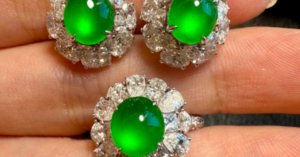
When evaluating a jadeite cabochon, clarity refers to what you can see inside the stone. Natural jadeite often contains soft white inclusions sometimes described as “cotton” by collectors. These appear like faint floating fibers within the jade. Light and subtle inclusions are normal and they reflect the stone’s natural formation. However, heavy white patches can dramatically reduce the value of a cabochon. Dark mineral spots are also normal and common. A tiny speck near the edge of a cabochon may be acceptable, but bigger dark spots in the center of the dome can reduce both beauty and value.

Cracks are a more serious problem. Jadeite can contain internal lines formed long ago during its geological history. Some are healed and stable, but others may weaken the stone. Because a cabochon has a smooth curved surface, cracks are difficult to hide. A obvious crack line across the dome can lower the stone’s value a lot.

It is important to remember that natural jadeite is never perfectly flawless. Unlike glass or synthetic materials, genuine jadeite will always show some internal structure if examined closely. A small amount of natural texture or inclusion is normal and even helps confirm that the jade is real and untreated.

For collectors seeking a high-quality jadeite cabochon, the goal is not absolute perfection. Instead, the best stones are those where any natural structure remains subtle and does not distract from the two qualities collectors prize most: color and grain & glow. When viewed at a normal distance, the cabochon should appear clean, luminous, and free of obvious spots or cracks.
Shape and Size of a Jadeite Cabochon

When evaluating a jadeite cabochon, shape and size is another key influence on both its beauty and its value, but it is a simple to judge for everybody.

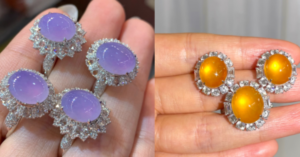
The most classic shape is the oval, which follows the natural structure of the jadeite and sits elegantly in jewelry settings. While round, pear, and other shapes exist, oval cabochons remain the most valuable and sought after by collectors.

In jadeite, the most desirable cabochons have a full, well-domed profile. Instead of appearing flat, the stone should rise smoothly from the base to a rounded peak. This height is important because the dome allows light to move through the jadeite and return to the eye, enhancing the stone’s color and glow.

Proportion also matters. For an oval jadeite cabochon, collectors often look for a balanced relationship between length and thickness. A commonly perfect proportion is close to 2:1. For example, a cabochon that measures around 10 mm in length may ideally have a thickness of about 4.5mm–5 mm. Achieving this kind of fullness is extremely difficult, especially in high-quality jadeite. Because good jadeite rough is limited, cutters are often forced to make stones thinner to avoid cracks or inclusions. As a result, thick, richly domed cabochons are so rare.

Size also plays an important role in cabochon’s value as well. Larger cabochons require larger pieces of high-quality rough, which are extremely rare. A fine cabochon measuring 15 mm can be many times more valuable than a smaller stone if it also maintains strong color, grain and glow, clarity, and a full dome.
Finding Your Right Jadeite Cabochon

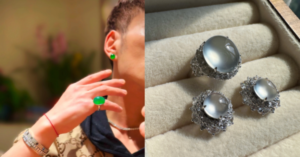
Choosing a jadeite cabochon ultimately comes down to understanding the balance between the four core pillars: color, grain and glow, clarity and cracks, shape and size. In reality, no single cabochon can possess absolute perfection in every aspect. For jade collectors, it is key to know what matters most to you. Some prioritize rich green color and accept minor internal cotton. Others prefer exceptional translucency

and fine grain and they accept lighter or darker color or very small size. A beautiful cabochon is one that fits both your aesthetic preference and your budget.

Cabochons are also among the most difficult jadeite pieces to judge from photographs or videos. Lighting, angles, and editing can dramatically change how a stone appears. This is why experienced collectors prefer to compare stones side by side under different lighting conditions whenever possible.

For collectors in the Middle East, Hermit Jade will soon open a store and welcome jade lovers to come, compare, and learn. We are committed to help global collectors develop a deeper understanding of jadeite quality.

For serious collectors seeking exceptional stones, our VIP sourcing service helps clients acquire top-tier jadeite cabochons. Many collectors around the world trust our expert eyes to locate rare stones that may never appear on the open market. We also welcome jade lovers to visit China for a jade discovery journey, we guide our clients through the jade markets and help them find the cabochon that truly speaks to them.

Jadeite collecting is a lifelong pursuit. With the right knowledge—and the right guide—the search for the perfect cabochon becomes part of the beauty of the journey.


Jadeite Carving — How Craftsmanship and Symbolism Add Value

Jadeite Carving — How Craftsmanship and Symbolism Add Value

Jadeite Carving

In our previous articles, we discussed how color defines value, and how grain and glow determine the inner quality of jadeite jade. Now we move to another interesting and important aspect that adds value to a piece of jadeite treasure: carving.

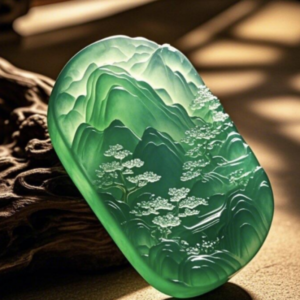
Before we explore jadeite carving, we firstly need to be aware that very top-grade jadeite gemstone — especially nearly perfect glass or ice quality bright color material — is usually not carved. It is reserved for cabochons, beads, bangles, and high-end jadeite jewelry such as rings and fine settings. This is because top-grade material is extremely rare and valuable, and it is usually found in smaller sizes. Shaping the finest parts of jadeite raw stones into clean cabochons or simple forms helps preserve maximum value.

Why Jadeite Is Carved

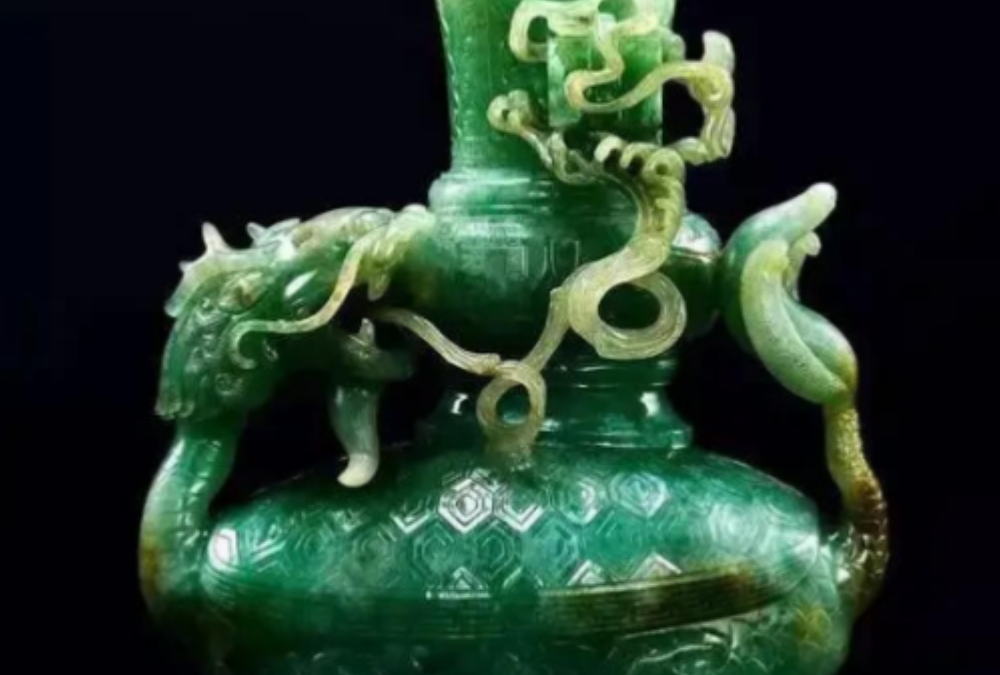
Unlike diamonds or sapphires which are simply polished or cut, authentic jadeite has a long tradition of carving in Chinese culture. For thousands of years, jade was shaped into symbolic objects rather than faceted stones. Carving transforms raw jade into something more than a gemstone. It becomes a cultural icon, spiritual symbol, a blessing, a personal statement. Creativity and craftsmanship from a master’s hands add great value to a piece of jadeite treasure.

Carving is typically used for:

  • Larger pieces of natural jadeite
  • Material with avoidable flaws
  • Stones with interesting patterns or multiple colors
  • Or jadeite that is not suitable for top-level cabochons
  • Or high-end material, but with simple forms of carving that represents meanings

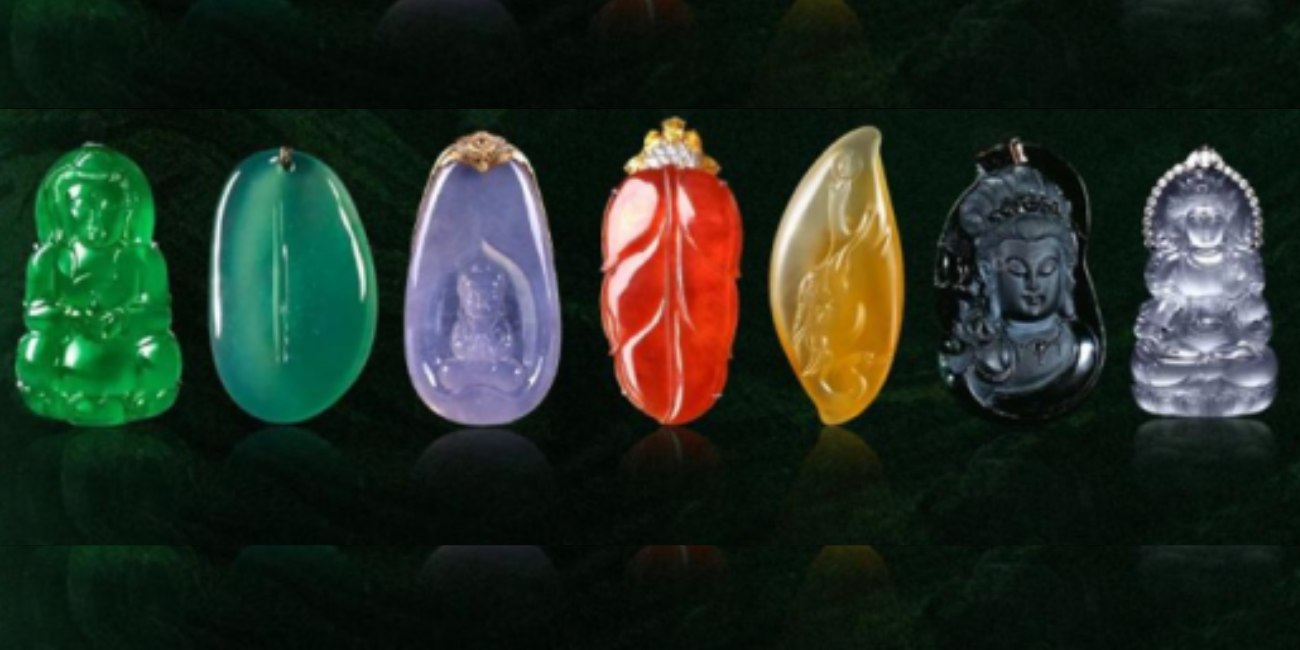
These carved pieces are often made into pendants, statement artworks, collectible sculptures, or decorative pieces placed in offices or luxury homes, or used for spiritual places.

Jadeite Carving — How Craftsmanship and Symbolism Add Value (1)

Jadeite Carving — How Craftsmanship and Symbolism Add Value

Symbolism in Jadeite Carving

In traditional Chinese culture, jadeite carvings are not abstract or for decoration purpose. Every character, motif, animal, or plant carries a deeper meaning. These symbols have been passed down for generations, giving jadeite jewelry a unique ability to tell personal stories or convey blessings.

Serious jadeite collectors may want to invite a master to custom their own carvings to reflect personal beliefs, family history, or aspirations. Through this, jadeite becomes not only a treasure to own, but a message to pass down.

Below are some of the most recognized symbols in traditional jadeite carving, each carrying established cultural meaning.

Cabbage (白菜)

Symbol of wealth and abundance. The pronunciation of “cabbage” (bai cai) sounds similar to “hundred wealth” in Chinese, making it popular for prosperity and business success.

Dragon (龙)

Represents strength, authority, protection, and power. The dragon is associated with imperial status and masculine energy. Dragon carvings often require high technical skill due to their complexity.

Phoenix (凤)

Symbol of grace, rebirth, and feminine virtue. When paired with the dragon, it represents marital harmony and balance between yin and yang.

Fish (鱼)

In Mandarin, “fish” (yu) sounds like “surplus.” It symbolizes abundance, prosperity, and smooth progress in life or business.

Lotus (莲)

Represents purity and spiritual growth. The lotus rises clean from muddy water, symbolizing integrity and resilience.

Guanyin (观音)

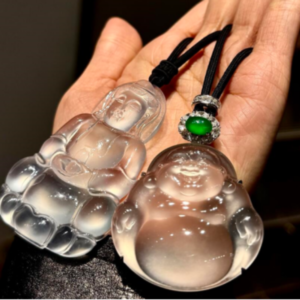
Guanyin, the Bodhisattva of Compassion, is one of the most revered figures in jade carving. She represents mercy, protection, and blessing. Many believe wearing a Guanyin carving brings peace and spiritual protection. Guanyin pendants are especially popular among women, although men also wear them for spiritual guidance.

Buddha (佛)

Often depicted as the Laughing Buddha (Maitreya), symbolizing happiness, contentment, and abundance. A Buddha carving represents positivity, generosity, and inner peace.

In many traditions:

  • “Men wear Guanyin”
  • “Women wear Buddha”
    This saying reflects balance and complementary spiritual protection.


Pixiu (貔貅)

A mythical creature believed to attract and protect wealth. It is especially popular among business owners and investors. Pixiu carvings are common in bracelets and pendants.

Qilin (麒麟)

A mythical hooved creature symbolizing prosperity, protection, and good fortune. Associated with peace and noble character.

Tortoise (龟)

Symbol of longevity and stability. Sometimes combined with a snake (Black Tortoise) representing protection.

Bamboo (竹)

Represents integrity, flexibility, and continuous growth. Bamboo bends but does not break.

Peony (牡丹)

Known as the “king of flowers.” Symbolizes wealth, honor, and feminine beauty.

Gourd (葫芦)

Symbol of protection and health. Historically used to hold medicine, it represents well-being and warding off negative energy.

Ruyi (如意)

A traditional curved scepter shape symbolizing “as you wish” or fulfilled desires. Often carved into pendants and decorative pieces.


(These symbols are often used in pendants or larger jade item artworks rather than small high-end rings. When it comes to fine jade ring meaning, green jade ring meaning, or white jade ring meaning, those pieces usually focus more on material quality — color, grain, glow — rather than heavy carving. Top-tier imperial jade cabochon pieces are normally kept simple, the beauty comes from the real jade itself.)


Jadeite Carving — How Craftsmanship and Symbolism Add Value (3)

Jadeite Carving — How Craftsmanship and Symbolism Add Value

The Relationship Between Stone and Artist

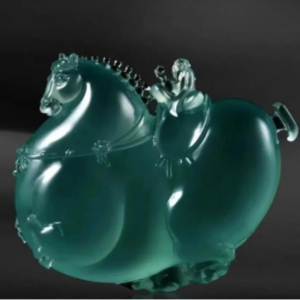
Great jadeite carving is never forced. True artists don’t impose a design onto the stone—they read it. Every jadeite rough has its own personality: layers of color, hidden fractures, translucent areas, solid zones etc. A talented carver studies the stone, identifying what it naturally wants to become. A patch of vibrant green may become a dragon’s eye. A pale, cloudy section might be left untouched to create visual contrast. This deep understanding of how to harmonize form and material is what makes a carving truly exceptional.

In markets such as jade UAE, including demand for decorative carvings in luxury homes, craftsmanship strongly influences value. However, carving cannot turn average material into high-end jadeite. The base quality still matters. Large carved artworks made from good-quality original jade stone can carry significant value — especially when the design uses the stone intelligently. However, the very highest jadeite stone price levels are still achieved by exceptional cabochons and bangles, not heavily carved pieces. Understanding this distinction helps buyers avoid confusion between high-end gemstone-grade real jadeite and artistic carved jadeite artworks. Both are valuable — but in different ways.

Jadeite Carving — How Craftsmanship and Symbolism Add Value (2)

Jadeite Carving — How Craftsmanship and Symbolism Add Value

A Global Dialogue Through Jade

While jade carving is rooted in Chinese tradition, its beauty and symbolism speak across cultures. From East Asia to the Middle East and beyond, collectors are drawn to jadeite’s ability to hold meaning within form. At Hermit Jade, we never mass-produce our designs. Every carved piece represents a dialogue between stone and soul, guided by tradition and elevated by personal connection.

At Hermit Jade, we honor this tradition by working only with master artisans, some may spend months or even years completing a single masterpiece. Each carving we offer is not only visually stunning but deeply meaningful, shaped by centuries of symbolism and respect for the stone’s natural beauty.


Jadeite Bangle: The First Piece, The True Treasure

Jadeite Bangle: The First Piece, The True Treasure

Jadeite Bangle: The First Piece, The True Treasure

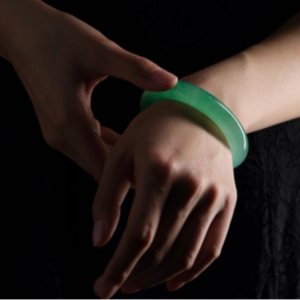
In the world of jadeite jade collection, everything often begins with a bangle. Among all jadeite jewelry, the bangle is both the starting point and the ultimate treasure.

Before jade pendants, before jade rings, before any other jade collection — a woman usually owns a jadeite jade bangle first. It is the most direct way to experience natural jadeite. It rests against the skin, moves with the hand, and becomes part of daily life. For many women, owning one beautiful jadeite bangle feels like claiming something deeply personal — a quiet symbol of identity and self-connection.

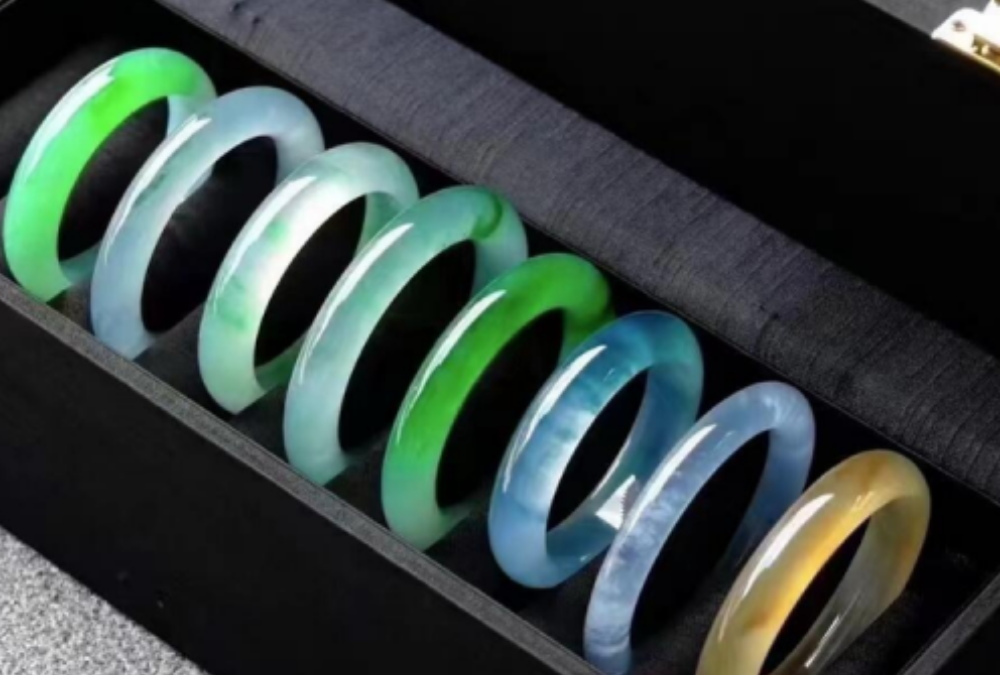
For those who fall in love with authentic jadeite, they own dozens of jade bangles. In same personal size, but each is different in color tone, translucency, texture, style, and presence. No two jadeite bangles are ever identical. Even when cut from the same jade stone, each circle carries its own character and charm.

Why the Jadeite Bangle Is So Difficult — And So Expensive

A beautiful real jadeite bangle is usually very valuable and expensive. Unlike jade pendants or jade rings, which is much smaller and can be designed to remove imperfections, a bangle must be carved from a single, solid piece of natural jadeite. It must survive and fit to be cut into a complete circle. That circle cannot hide cracks, cannot avoid weak grain, cannot compromise on structure.

The rough material must be large enough! The internal crystal structure must be even! There must be no structural fractures running through the core! If a serious flaw appears at any stage of carving, the entire piece can fail. This is why high quality jadeite bangles command strong jadeite price levels. The loss rate during production is significant. Many rough stones cannot produce even one complete bangle. From a large piece of jadeite rough, sometimes only a single usable circle can be created.

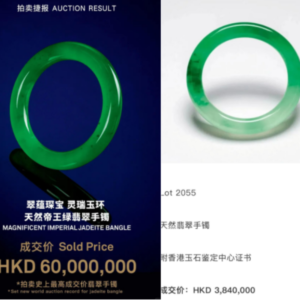
And when the bangle also carries fine grain, glowing translucency, and vivid natural color — whether imperial green jadeite, soft lavender, icy white, or honey yellow — the value increases dramatically.

A fine jadeite jade bangle represents material sacrifice. What was removed is much greater than what remains. For this reason, in established markets and increasingly in jade UAE and jade bangle Dubai searches, collectors who understand authentic jadeite focus heavily on bangles when building serious collections.

Jadeite Bangle The First Piece, The True Treasure (1)

Jadeite Bangle The First Piece, The True Treasure (1)

Meeting “Your” Bangle Is Not Easy

There is another truth that only collectors understand: Not every beautiful jadeite bangle is yours.

Size matters. A jadeite bangle does not clasp at the wrist; it must pass over the hand. If the inner diameter is too small, it will not fit. If it is too large, it will not sit correctly. This creates a rare situation in fine jewelry: a masterpiece may exist, but if it is not your size, it cannot belong to you.

Beyond size, there is color preference, translucency preference, thickness, and personal feeling. Some women prefer slimmer, refined circles. Others want thicker, substantial forms. Some search only for imperial green jadeite bangle pieces. Others are drawn to icy clarity or soft lavender tones.

Because authentic jadeite is natural and unrepeatable, supply is very limited. Matching the right quality, the right color, the right thickness, and the exact right size can take time — sometimes years.

When a woman finally finds the jadeite jade bangle that fits her perfectly, both physically and emotionally, collectors often describe it as destiny rather than purchase.

Jadeite Bangle The First Piece, The True Treasure (2)

Jadeite Bangle The First Piece, The True Treasure (2)

The Emotional Shift: From Ownership to Collection

For first-time buyers, buying jadeite online or in person, the goal is usually simple: to own one real jadeite bangle.

For seasoned collectors, the mindset changes. It becomes about comparison, refinement, and rarity. The differences become visible — the depth of green, the smoothness of polish, the way light enters and exits the stone. The glow, often called “water,” becomes more important than surface brightness.

Over time, bangles are not replaced. They are added.

One for daily wear.
One for formal occasions.
One for long-term investment jadeite holding.
One kept carefully for the next generation.

More and more……

It is common for serious jadeite lovers to own many bangles of identical size but entirely different personalities. This is why bangles are considered the most collectible form of jadeite jewelry.

Jadeite Bangle The First Piece, The True Treasure (3)

Jadeite Bangle The First Piece, The True Treasure

Cultural Meaning and Personal Presence

Culturally, the circular jadeite bangle symbolizes continuity, harmony, and protection. It has been worn for centuries as a form of quiet strength. Many families pass a jadeite jade bangle from mother to daughter, not as fashion, but as continuity.

But beyond tradition, the bangle has a physical presence that other jewelry does not. It moves with the hand. It touches the pulse. It is visible to the wearer throughout the day. A woman might wear one daily, silently carrying strength, grace, and ancestral blessing. It is not worn for others first. It is worn for oneself.

Why the Jadeite Bangle Endures

In a world of trend-driven jewelry, the jadeite bangle remains unchanged. A truly beautiful jadeite bangle is expensive because it represents:

Scarcity of large, fine natural jadeite.
High production risk.
Material integrity proven through form.
Exact size limitation.
And irreplaceable uniqueness.

For new buyers, it is the first meaningful step into the world of genuine jadeite.

For experienced collectors, it becomes the most refined and addictive pursuit.

And for true jadeite lovers, there is always the quiet hope of finding one more perfect circle — in the right color, with the right glow, in exactly the right size.

Because when you finally meet your jadeite bangle, you do not question it. You simply know!

Jadeite Grain and Glow — How Structure and Light Define Value

Jadeite Grain and Glow — How Structure and Light Define Value

Jadeite Grain and Glow — How Structure and Light Define Value

In our previous article, we explained how color defines value in jadeite jewelry. Color is powerful — it often decides a significant part of a jadeite stone price.

But color is only half of the story. To truly understand jadeite jade, you must look deeper — into the internal structure of the stone and the way light lives inside it. In professional terms, this is known in Chinese jade culture as zhong shui (种水).

At Hermit Jade, we describe it in a simple and clear way: Grain and Glow. This is what separates ordinary material from high-level authentic jadeite.

What Is Grain and Glow?

Grain and glow describe the inner quality of a natural jadeite piece — how it is formed and how it interacts with light.

Grain (种)

Grain refers to the crystal structure of the jadeite jade stone — how fine, compact, and even the particles are.

  • Fine grain means tight, dense structure
  • The surface polishes smooth and clean
  • The texture feels refined and solid

Fine grain is one of the most important indicators of high-end real jadeite and genuine jadeite. Coarse grain, by contrast, appears rougher and less refined, even if the color looks attractive at first glance.

Glow (水)

Glow describes translucency — how light enters and diffuses inside the stone.

  • Does light pass through softly?
  • Does the jade appear watery?
  • Does it glow gently even under soft lighting?

High-quality authentic jade does not simply reflect light — it holds light within.

When grain is fine and glow is strong, the stone feels alive. This is what experienced collectors call powerful true jade or premium original jade stone.

Jadeite Grain and Glow — How Structure and Light Define Value (1)

Jadeite Grain and Glow — How Structure and Light Define Value (1)

Why Structure and Light Matter So Much

Many buyers focus only on color and ask:

  • What is jadeite jade?
  • Is jadeite real jade?
  • What makes real jadeite valuable?

The answer always comes back to structure.

A bright green piece with coarse texture and weak translucency will not match the value of a softer-colored stone with excellent grain and luminous glow. In serious jadeite and jade evaluation, grain and glow often determine long-term worth more than color alone.

This is especially important when selecting:

  • An imperial jade cabochon
  • A fine jade bangle Dubaicollectors seek
  • A premium jade bracelet Dubaibuyers admire
  • Investment-grade jade jewellery Dubaiclients request
  • Or high-quality jewelry jade stonepieces in the jade UAE market

Without strong grain and glow, even beautiful color cannot reach top-tier pricing.

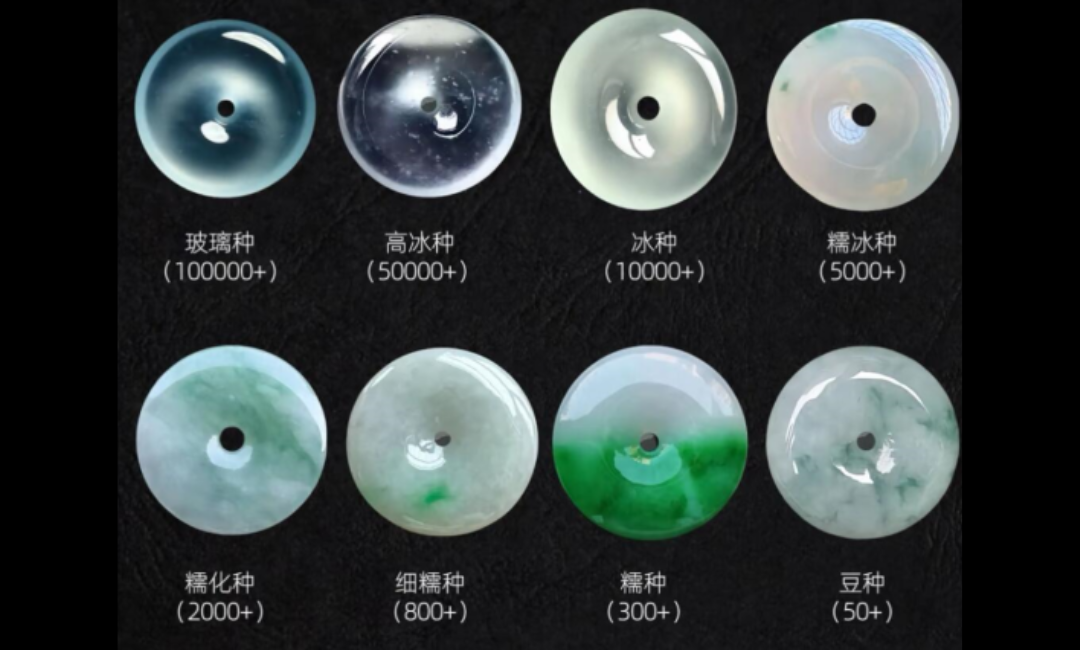
The Four Main Levels of Grain and Glow

Understanding these levels explains why two stones with similar color can have very different jadeite stone price.

  1. Glass (玻璃种)
  • Ultra-fine grain
  • Nearly transparent
  • Looks like frozen crystal water
  • Extremely rare and highly valuable

This represents the highest level of natural jadeite.

  1. Ice (冰种)
  • Fine texture
  • Semi-translucent
  • Clean, cool inner glow
  • Highly desirable and elegant

Often seen in premium white, green, and lavender jadeite gemstone collections.

  1. Bean (豆种)
  • Medium to coarse grain
  • Limited translucency
  • More affordable

Color may still be pleasant, but depth and inner life are reduced.

  1. Moss / Oily (花青种 / 油青种)
  • Cloudy structure
  • Uneven tone
  • Minimal glow

Usually lower in value and commonly used for carvings or decorative jade item pieces.

How to Evaluate Grain and Glow

If you truly want to understand authentic jadeite, never rely only on photos — especially if you plan to buy jadeite online.

When examining a piece in person:

  • Observe how light behaves
  • Slowly rotate the stone
  • Look for inner shimmer
  • Check transparency level
  • Feel the density and smoothness
  • Notice the firmness and structural strength

This applies whether you are choosing:

  • A jade ring
  • A piece with jade ring men's meaning
  • A green jade ring meaningdesign
  • A white jade ring meaningstyle
  • Or even a jade engagement ring meaningheirloom

Before asking:

  • What does a jade ring symbolize?
  • What does jade ring symbolize?
  • What does a jade ring mean?
  • What is a jade ring?
  • What do jade rings symbolize?
  • Meaning of jade ring?
  • Jade ring symbolism?
  • Jade ring significance?
  • Jade ring bedeutung?

You must first understand the quality of the material itself.

The meaning of a jade ring is only as strong as the quality of the real jade behind it.

And here is something every collector must remember:

The more you see and compare, the more you understand.

Never judge a piece from a filtered image or online display. Compare different stones side by side. View them under different lighting. Hold them in your hand.

Only by comparing multiple examples of original jade, authentic jade, and high-quality jadeite jade will you begin to see:

  • The difference in grain
  • The difference in glow
  • The difference in pricing

This is how trained eyes develop.

The Hermit Jade Standard

At Hermit Jade, we evaluate more than surface beauty.

We focus on:

  • Grain precision
  • Translucent glow
  • Natural integrity
  • True material quality

We work exclusively with authentic jadeite, not substitutes, and we clearly distinguish between jade and jadeite, including the difference from nephrite jadeite.

Understanding jadeite origin also helps explain structural quality — geological formation directly influences grain and translucency. Our goal is simple: present only genuine jadeite of high level grain and glow that worthy of long-term collection.

Structure Is the Soul of Jadeite

Color attracts the eye. Grain and glow determine deeper value.

In the world of jade jadeite, the true difference between ordinary and exceptional lies beneath the surface. Once your eyes learn to see structure and light, you will never look at real jadeite the same way again. Because true jade does not only shine on the outside. It shines from within.

Jadeite Colors — And How Color Defines Value

Jadeite Colors — And How Color Defines Value

Jadeite Colors — And How Color Defines Value

In the world of jadeite jewelry wearing and collection, color is not just a visual preference, it is the foundation of value and price of jadeite jade. Among experienced collectors and professionals, it is widely accepted that jadeite color determines 50% of a jadeite stone’s price, and in exceptional cases, even more.

Whether evaluating a jadeite jade stone, an imperial jade cabochon, a jade bangle, a jade bracelet, or a jade ring, color is always the first element to be judged. Brightness, saturation, purity, and translucency work together to define whether a piece of jadeite jade is ordinary, collectible, or truly rare.

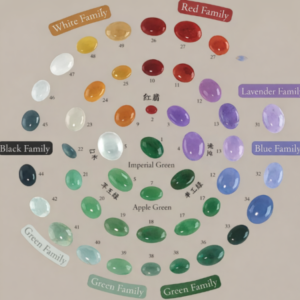
At Hermit Jade, every piece of natural jadeite and authentic jadeite jewelry is evaluated through professional color standards, because true jadeite value always begins with color. In this blog, we will share the seven major categories of jadeite jade colors that could be useful for a new collector.

Jadeite Colors — And How Color Defines Value

Jadeite Colors — And How Color Defines Value

Green Jadeite — The Benchmark of Value

Green jadeite is universally recognized as the most valuable color family. When people think of real jadeite, they often envision vivid green jadeite with strong translucency and inner glow.

The finest example is Imperial Green jadeite, often cut as an imperial jade cabochon. This color appears rich, bright, and alive, maintaining its glow even under soft lighting. In the global market, top-quality imperial green jadeite commands the highest prices, and even small stones can reach remarkable price.

Lighter green jadeite, such as apple green, remains highly desirable when clean and bright. These colors are frequently used in jadeite jewelry designed for daily wear, including jade rings, bangles, and bracelets.

Green jade ring meaning: prosperity, vitality, growth
Meaning of jade ring in green jadeite: long-term fortune and protection
What does a jade ring symbolize? balance, continuity, and success

The brighter, richer, purer, and more translucent the green, the higher the jadeite stone price.

Lavender Jadeite — The Power of Vivid Purple

Lavender or purple jadeite gemstone ranges from light lilac to deep, vivid violet. In value assessment, the richer, brighter, and more saturated the purple, the more valuable the stone becomes.

Top-quality purple natural jadeite shows:

  • Strong, even saturation
  • Bright and lively tone
  • Fine grain structure
  • Clear translucency with inner glow

When purple is intense, vivid and striking, it expresses confidence and charm of women. Deep, vibrant violet jadeite can feel bold, radiant, even slightly mysterious. Lighter lavender and pink-purple tones can express elegance and femininity in a softer way. Both can be beautiful — but in terms of material quality, brightness, depth, and saturation always increase value. Uneven color, grayish tone, or dull texture will significantly lower the jadeite stone price, even if the color appears purple.

In high-level jadeite jewelry, exceptional purple jadeite is rare because it is difficult to find strong color combined with fine grain and glass or ice-level glow. When these elements come together, purple jadeite becomes highly collectible and powerful in appearance.

 In jadeite jewelry, lavender jadeite is often chosen for pendants and jade stone rings for women where elegance and personal meaning are emphasized.

White / Icy Jadeite — Value Through Purity and Light

White jadeite, commonly referred to as icy jadeite, appears colorless or nearly transparent. In this category, value is determined by texture, clarity, and light performance rather than hue. Fine icy jadeite feels clean, pure, and luminous, making it popular in modern jadeite jewelry and minimalist jade rings.

White jade ring meaning: purity, clarity, new beginnings
What is a jade ring in icy jadeite? a symbol of simplicity with depth
Meaning of jade ring (white jade): clean energy and refined taste

Flawless, highly translucent and strong light jadeite with no color remains rare and highly valued.

Yellow and Red Jadeite — Warm and Uncommon

Yellow jadeite, sometimes called honey jade, derives its color from iron elements within the stone. When evenly colored and translucent, it displays warmth and vitality. Clean, bright yellow jadeite is less common than many expect and continues to gain appreciation among collectors.

Red jadeite is rarer still and usually appears in warm russet or reddish-brown tones. When naturally colored and well-textured, both yellow and red jadeite can hold strong value within the jadeite jade spectrum.

Blue and Gray Jadeite — Subtle and Restrained

Blue jadeite exists but typically appears soft rather than vivid. As gray tones increase, brightness decreases, and value declines accordingly. While these colors are less dominant in high-end jadeite jewelry, they still appeal to collectors who prefer understated elegance. In jadeite evaluation, brightness always outweighs rarity—a lively color will consistently surpass a dull one which is the reason that jadeite with blue or gray hue usually can’t have high price in market.

Black Jadeite — Strength in Simplicity

Black jadeite is opaque with a polished, sleek surface. The darker and purer the black, the higher the value. Any visible brown or green undertone lowers quality. Black jadeite is commonly used in men’s jadeite jewelry, especially jade rings and jade pendants.

Jade ring men’s meaning: strength, protection, resilience
Jade ring symbolism: stability and inner power
Jade ring significance: grounded confidence

Jadeite Colors — And How Color Defines Value (2)

Jadeite Colors — And How Color Defines Value (2)

Understanding Color Comes With Experience

Jadeite color is something no photograph can fully capture. Brightness, depth, and translucency shift with light, movement, and distance—details that cannot be judged from a screen. Many jadeite images seen online are heavily edited or professionally staged to make the stone appear brighter, cleaner, and more translucent than it is in real life. Relying on such images to judge quality or pricing can be misleading.

The more real jadeite you see and compare in person, the more clearly you understand the differences in color and value. When stones are placed side by side in real life, what appears similar online can feel completely different in reality.

True appreciation of jadeite jade comes from seeing, comparing, and experiencing the stone directly. Never judge jadeite color from a single image or online display alone. Real jadeite reveals its true value only when viewed in person.

Jadeite Colors — And How Color Defines Value (3)

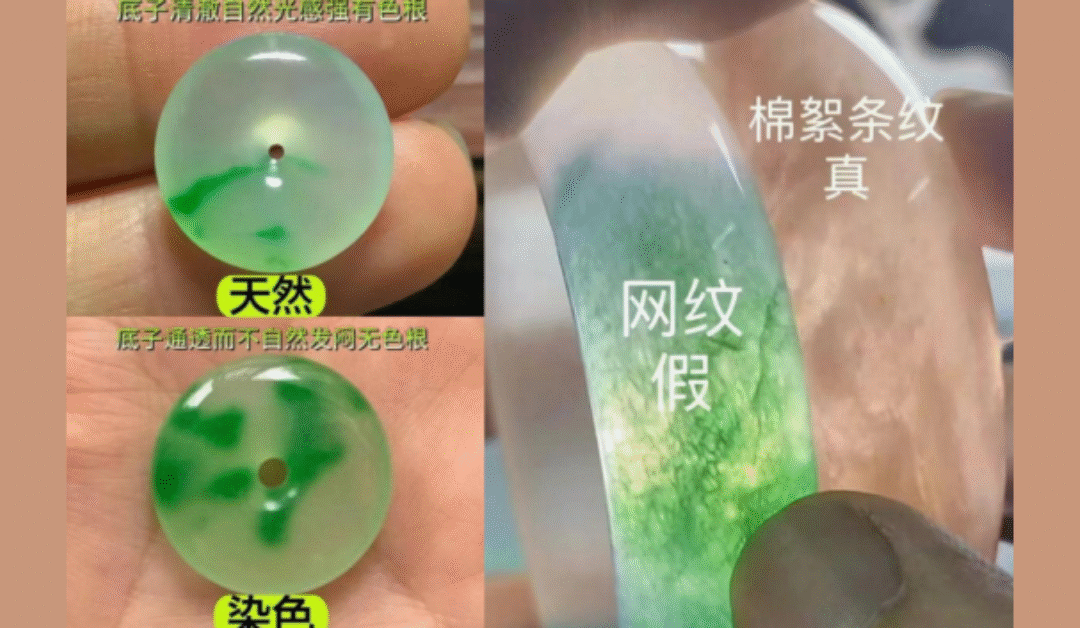
True Jadeite vs. Fake Jadeite

True Jadeite vs. Fake Jadeite

Journal

True Jadeite vs. Fake Jadeite

Step into the world of China’s finest cultural treasures — from the rarest jade to masterful heritage artistry. We share stories, craftsmanship, and traditions that transcend time, revealing the essence of true luxury.