
Jadeite Carving
In our previous articles, we discussed how color defines value, and how grain and glow determine the inner quality of jadeite jade. Now we move to another interesting and important aspect that adds value to a piece of jadeite treasure: carving.
Before we explore jadeite carving, we firstly need to be aware that very top-grade jadeite gemstone — especially nearly perfect glass or ice quality bright color material — is usually not carved. It is reserved for cabochons, beads, bangles, and high-end jadeite jewelry such as rings and fine settings. This is because top-grade material is extremely rare and valuable, and it is usually found in smaller sizes. Shaping the finest parts of jadeite raw stones into clean cabochons or simple forms helps preserve maximum value.
Why Jadeite Is Carved
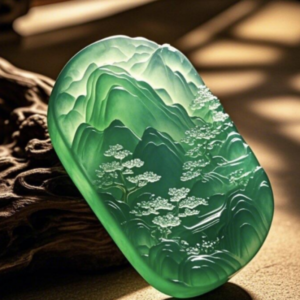
Unlike diamonds or sapphires which are simply polished or cut, authentic jadeite has a long tradition of carving in Chinese culture. For thousands of years, jade was shaped into symbolic objects rather than faceted stones. Carving transforms raw jade into something more than a gemstone. It becomes a cultural icon, spiritual symbol, a blessing, a personal statement. Creativity and craftsmanship from a master’s hands add great value to a piece of jadeite treasure.
Carving is typically used for:
- Larger pieces of natural jadeite
- Material with avoidable flaws
- Stones with interesting patterns or multiple colors
- Or jadeite that is not suitable for top-level cabochons
- Or high-end material, but with simple forms of carving that represents meanings
These carved pieces are often made into pendants, statement artworks, collectible sculptures, or decorative pieces placed in offices or luxury homes, or used for spiritual places.
Jadeite Carving — How Craftsmanship and Symbolism Add Value
Symbolism in Jadeite Carving
In traditional Chinese culture, jadeite carvings are not abstract or for decoration purpose. Every character, motif, animal, or plant carries a deeper meaning. These symbols have been passed down for generations, giving jadeite jewelry a unique ability to tell personal stories or convey blessings.
Serious jadeite collectors may want to invite a master to custom their own carvings to reflect personal beliefs, family history, or aspirations. Through this, jadeite becomes not only a treasure to own, but a message to pass down.
Below are some of the most recognized symbols in traditional jadeite carving, each carrying established cultural meaning.
Cabbage (白菜)
Symbol of wealth and abundance. The pronunciation of “cabbage” (bai cai) sounds similar to “hundred wealth” in Chinese, making it popular for prosperity and business success.
Dragon (龙)
Represents strength, authority, protection, and power. The dragon is associated with imperial status and masculine energy. Dragon carvings often require high technical skill due to their complexity.
Phoenix (凤)
Symbol of grace, rebirth, and feminine virtue. When paired with the dragon, it represents marital harmony and balance between yin and yang.
Fish (鱼)
In Mandarin, “fish” (yu) sounds like “surplus.” It symbolizes abundance, prosperity, and smooth progress in life or business.
Lotus (莲)
Represents purity and spiritual growth. The lotus rises clean from muddy water, symbolizing integrity and resilience.
Guanyin (观音)
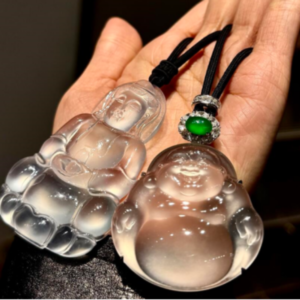
Guanyin, the Bodhisattva of Compassion, is one of the most revered figures in jade carving. She represents mercy, protection, and blessing. Many believe wearing a Guanyin carving brings peace and spiritual protection. Guanyin pendants are especially popular among women, although men also wear them for spiritual guidance.
Buddha (佛)
Often depicted as the Laughing Buddha (Maitreya), symbolizing happiness, contentment, and abundance. A Buddha carving represents positivity, generosity, and inner peace.
In many traditions:
- “Men wear Guanyin”
- “Women wear Buddha”
This saying reflects balance and complementary spiritual protection.
Pixiu (貔貅)
A mythical creature believed to attract and protect wealth. It is especially popular among business owners and investors. Pixiu carvings are common in bracelets and pendants.
Qilin (麒麟)
A mythical hooved creature symbolizing prosperity, protection, and good fortune. Associated with peace and noble character.
Tortoise (龟)
Symbol of longevity and stability. Sometimes combined with a snake (Black Tortoise) representing protection.
Bamboo (竹)
Represents integrity, flexibility, and continuous growth. Bamboo bends but does not break.
Peony (牡丹)
Known as the “king of flowers.” Symbolizes wealth, honor, and feminine beauty.
Gourd (葫芦)
Symbol of protection and health. Historically used to hold medicine, it represents well-being and warding off negative energy.
Ruyi (如意)
A traditional curved scepter shape symbolizing “as you wish” or fulfilled desires. Often carved into pendants and decorative pieces.
(These symbols are often used in pendants or larger jade item artworks rather than small high-end rings. When it comes to fine jade ring meaning, green jade ring meaning, or white jade ring meaning, those pieces usually focus more on material quality — color, grain, glow — rather than heavy carving. Top-tier imperial jade cabochon pieces are normally kept simple, the beauty comes from the real jade itself.)
Jadeite Carving — How Craftsmanship and Symbolism Add Value
Jadeite Carving — How Craftsmanship and Symbolism Add Value
The Relationship Between Stone and Artist
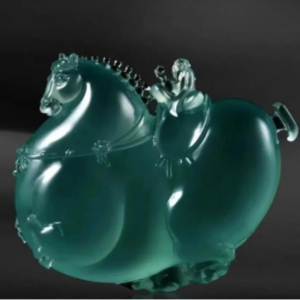
Great jadeite carving is never forced. True artists don’t impose a design onto the stone—they read it. Every jadeite rough has its own personality: layers of color, hidden fractures, translucent areas, solid zones etc. A talented carver studies the stone, identifying what it naturally wants to become. A patch of vibrant green may become a dragon’s eye. A pale, cloudy section might be left untouched to create visual contrast. This deep understanding of how to harmonize form and material is what makes a carving truly exceptional.
In markets such as jade UAE, including demand for decorative carvings in luxury homes, craftsmanship strongly influences value. However, carving cannot turn average material into high-end jadeite. The base quality still matters. Large carved artworks made from good-quality original jade stone can carry significant value — especially when the design uses the stone intelligently. However, the very highest jadeite stone price levels are still achieved by exceptional cabochons and bangles, not heavily carved pieces. Understanding this distinction helps buyers avoid confusion between high-end gemstone-grade real jadeite and artistic carved jadeite artworks. Both are valuable — but in different ways.
Jadeite Carving — How Craftsmanship and Symbolism Add Value
A Global Dialogue Through Jade
While jade carving is rooted in Chinese tradition, its beauty and symbolism speak across cultures. From East Asia to the Middle East and beyond, collectors are drawn to jadeite’s ability to hold meaning within form. At Hermit Jade, we never mass-produce our designs. Every carved piece represents a dialogue between stone and soul, guided by tradition and elevated by personal connection.
At Hermit Jade, we honor this tradition by working only with master artisans, some may spend months or even years completing a single masterpiece. Each carving we offer is not only visually stunning but deeply meaningful, shaped by centuries of symbolism and respect for the stone’s natural beauty.