Welcome to the World of Jade Collecting
Jade is one of the oldest and most respected natural treasures in Chinese culture. For thousands of years, it has been used for jewelry, carvings, ornaments, ritual objects, and objects of personal meaning. Yet for many people outside China, the word “jade” can be confusing. Many different stones are sold as “jade,” while their materials, origins, qualities, and values can be very different.
For anyone who wants to understand jade or begin collecting it, the first step is to understand what jade really is.
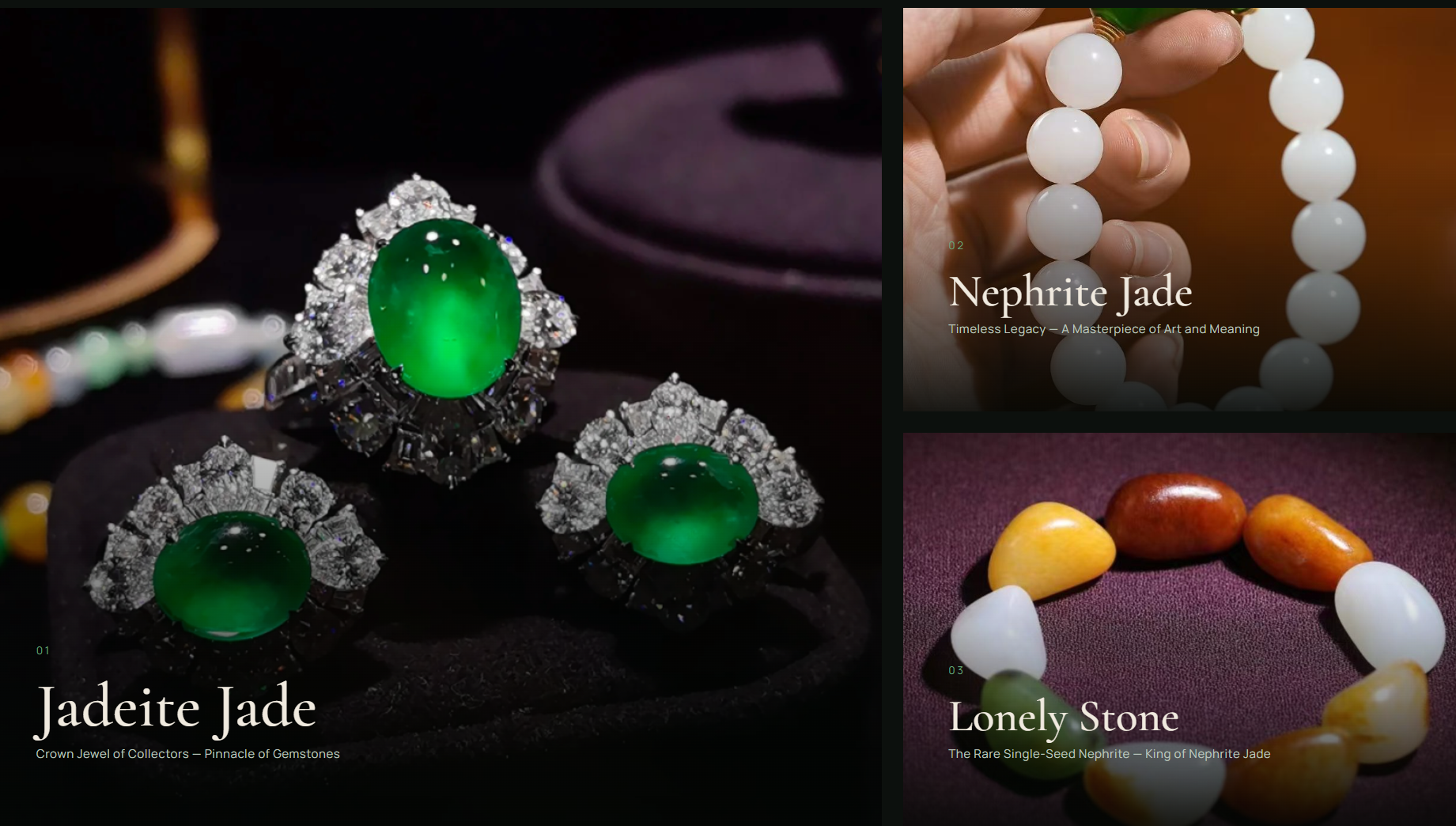
At Hermit Jade, we take a clear view. In the world of true jade, there are two great types: jadeite and nephrite. Jadeite jade is a pyroxene-rich jade material, while nephrite jade is an amphibole-rich jade material. Both are made of tightly interlocking microscopic crystals, which gives jade its famous toughness. They are different materials, with different histories, appearances, sources, and collecting traditions. The finest examples of both can be extremely rare and valuable, combining natural beauty with human craftsmanship.
The Two Great Jade Types
1. Jadeite — The Rare and Brilliant Side of Jade
Jadeite is best known today through fine jadeite from Myanmar, which has been highly prized in China for centuries and has become one of the world's most valuable jade materials.
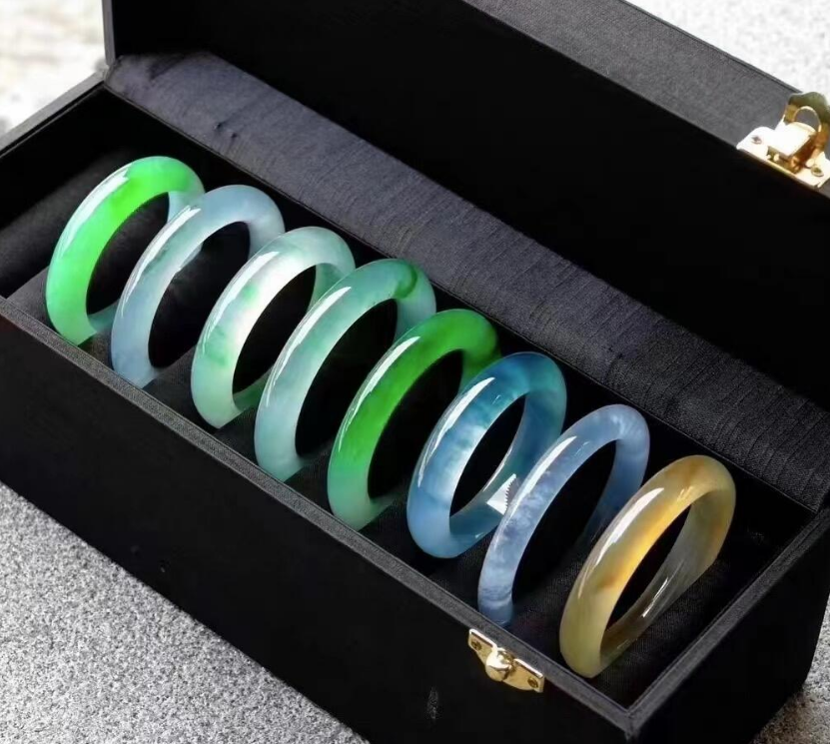
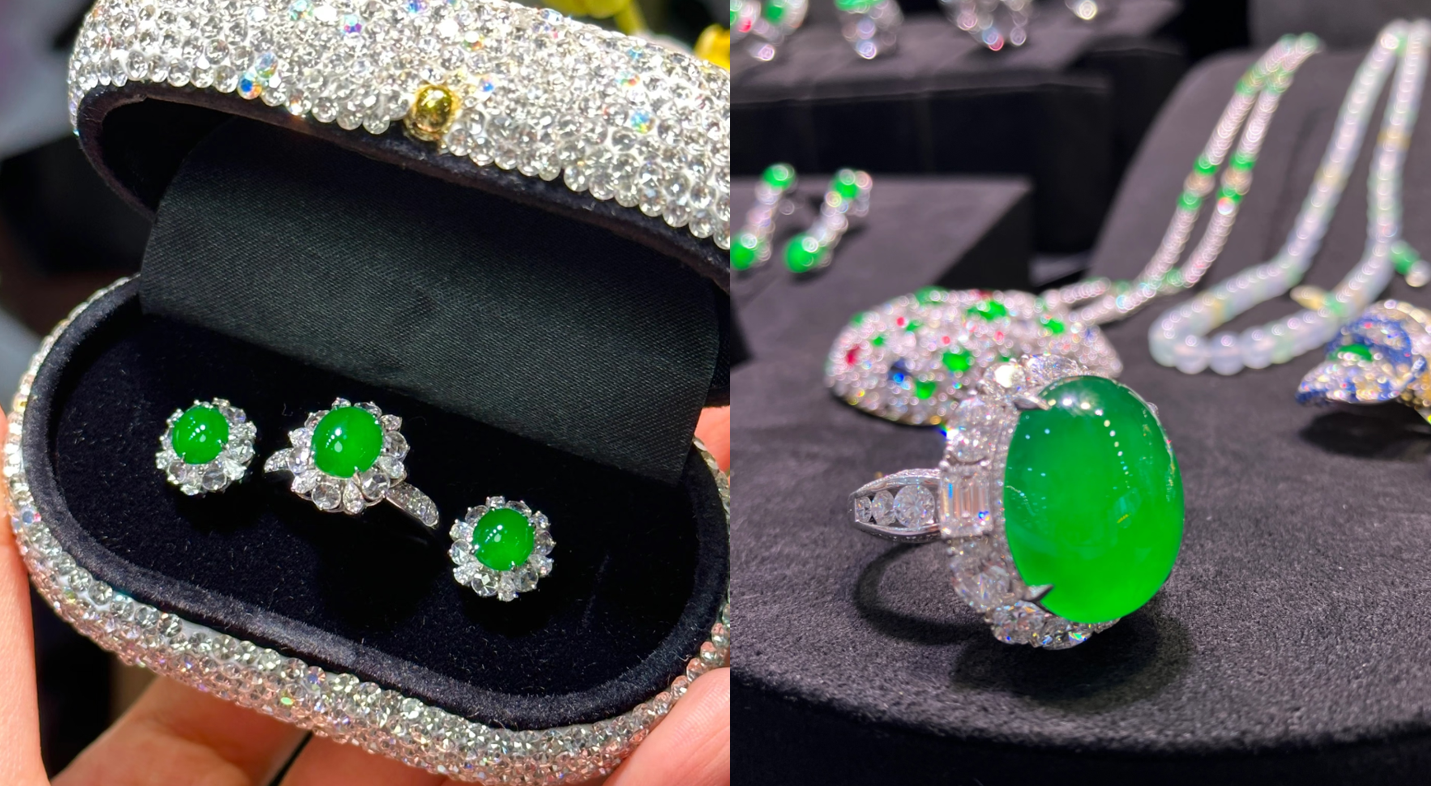
Jadeite can occur in many colors, including green, lavender, white, yellow, orange, black, and others. Among all these colors, fine green jadeite remains the most sought-after, especially vivid, highly translucent green. But the finest jadeite is not simply about color. Collectors look at the complete combination of color, transparency, texture, structure, light performance, clarity and absence of flaws, size and proportions, as well as craftsmanship.
Exceptional jadeite is very rare. A large piece of rough jadeite may contain only a tiny amount of truly fine material, or none at all. This scarcity has helped fine jadeite develop a strong collector and auction market internationally.
For serious collectors, the finest jadeite is therefore more than jewelry. It is a rare natural material of deep charm that can also become a work of art and a collectible asset.
2. Nephrite Jade — The Soul of Chinese Jade
If jadeite is known for color, translucency, light, and visual impact, nephrite represents another side of jade: history, texture, touch, craftsmanship, and cultural continuity.
Nephrite has been treasured in China for thousands of years. Its colors range from white and green to yellow, gray, brown, and black. Its dense, fibrous structure gives it exceptional toughness and a distinctive smooth appearance. For many collectors, the charm of fine nephrite is about the touch and inner glow. Good nephrite can feel remarkably smooth, silky, or oily in the hand.
This is a different kind of beauty, and it is one of the reasons nephrite has such a deep place in Chinese jade culture.
Why Is Nephrite Called Hetian Jade in China?
As you enter the world of nephrite jade, you may notice that people call nephrite jade Hetian Jade (和田玉) as well. You may even see “Hetian Jade” written on certificates instead of “nephrite jade.” This can be confusing, especially when you are just beginning to learn about jade.
Hetian is a place in Xinjiang, China. So if nephrite jade is called Hetian Jade, does that mean all nephrite jade comes from this one place? The answer is no.
There are many nephrite sources around the world. However, because nephrite jade from Xinjiang Hetian has such a strong reputation in China, the name Hetian Jade (和田玉) is now also widely used in the Chinese jade market for nephrite from other origins. Nephrite from places such as Qinghai in China and Russia is also sold under the broader name Hetian Jade, even though it does not originate from Hetian.
Different origins can produce their own distinctive characteristics, and each can have fine material that is valued by collectors. For serious collectors, origin is something they want to understand, and experienced collectors can often recognize differences between materials from different origins. But origin alone does not determine the value of a piece of nephrite jade. Different origins can produce pieces of high value and beauty.
The King of Nephrite: Single-Seed Nephrite Jade from Hetian
Single-seed nephrite jade holds a very special position in the world of nephrite. It is formed from the small amount of nephrite that has been naturally transported and shaped by water in the Yurungkash River (玉龙喀什河) in Xinjiang Hetian over a very long period of time.
The surface can develop a distinctive natural skin, while the stone itself may have an exceptionally fine and dense structure. The true value lies in the quality of the material, its natural condition, rarity, shape, color, texture, skin, size, and overall beauty. High-quality, 100% natural single-seed nephrite jade is extremely rare and valuable.
At Hermit Jade, we have given a special name to the single-seed Xinjiang Hetian jade that represents the highest level of this tradition: Lonely Stone.
Each Lonely Stone has its own natural shape, skin, texture, and character. No two pieces are the same.
Jadeite and Nephrite: Two Different Collecting Worlds
Jadeite and nephrite should not simply be viewed as “better” or “worse” versions of each other. They offer two very different experiences for collectors. A serious collector can appreciate both. Fine jadeite may attract you with its color and light, while fine nephrite may draw you in through its texture, warmth, and sense of history. They are different, but both belong to the world of jade.
| Jadeite | Nephrite | |
|---|---|---|
| Main character | Color, translucency, light | Texture, warmth, material character |
| Best-known source | Myanmar | China, Russia, and other regions |
| Chinese tradition | Particularly important in Chinese luxury jade culture from the Qing period onward | Thousands of years of Chinese jade culture |
| Famous colors | Imperial green, lavender, white, etc. | White, green, mutton-fat white, celadon, black, etc. |
| Collector focus | Color, transparency, texture, structure, rarity | Texture, density, oiliness, color, natural character, craftsmanship, provenance |
| Market character | Strong luxury jewelry and auction market | Strong cultural, artistic, and collector market |
| Ultimate attraction | Rare visual beauty, translucency, and scarcity | Material character, history, and individuality |
What About Other Stones Called “Jade”?
This is where buyers need to be careful.
Many other stones may be sold as “jade” because they look similar or have traditionally been used for carvings. But looking like jade does not make a material jade. Materials such as serpentine, quartzite, and other ornamental stones can be beautiful in their own right, but they are not the same materials as jadeite or nephrite. For serious collectors, authenticity is the beginning.
The Hermit Jade Perspective
At Hermit Jade, we believe jadeite and nephrite are the two great worlds of jade worth exploring and collecting.
Within jadeite, we focus on exceptional natural jadeite with rare color, high translucency, fine texture, fine structure, and visual character.
Within nephrite, we focus on fine and top-quality nephrite and, in particular, exceptional Xinjiang Hetian single-seed jade — Lonely Stones.
We believe that understanding jade comes before collecting jade. If you are just beginning this journey, you are about to discover a world that goes far beyond jewelry and decoration. Fine jade can become one of the most fascinating and valuable natural treasures in the world — not simply because of its price, but because of the rare beauty and character that quietly lie within the stone.
We are glad to begin this journey with you.
Welcome to the world of Fine Jade.
Appendix: Jade Collector's Terminology Guide
A note for collectors:
Chinese jade has its own language. Many terms used by Chinese collectors do not have a perfect one-word equivalent in English. Some describe a material quality, some describe appearance, and others describe traditional forms or characteristics that experienced collectors understand almost intuitively.
This guide explains some of the most commonly used terms you may encounter when viewing or discussing jade with Chinese collectors and dealers.
Part I. Jadeite Terminology — 翡翠
A. 种水 — Material, Texture & Transparency
种 (Zhong)
Zhong refers broadly to the quality and structure of jadeite material. It is not simply “transparency.” It reflects the fineness, compactness, texture, and overall quality of the jadeite.
Common terms include:
- 玻璃种 (Bōlí Zhǒng) — Glassy / Glass-like
Extremely fine and clear-looking jadeite with high transparency and a clean, crisp appearance. - 高冰种 (Gāo Bīng Zhǒng) — High Icy
Highly translucent to transparent jadeite with a bright, clean appearance and strong light transmission. - 冰种 (Bīng Zhǒng) — Icy
Translucent jadeite with an appearance often compared to clear ice. It may show a cool, clean light quality. - 糯种 (Nuò Zhǒng) — Glutinous / Waxy
A softer-looking material with lower transparency and a smooth, creamy visual quality. - 糯冰种 (Nuò Bīng Zhǒng) — Waxy-Icy
Between glutinous and icy in appearance, combining a soft texture with relatively good translucency.
These terms are commonly used in the Chinese jade market, but they are market terminology rather than standardized gemological grades.
水头 (Shuǐtóu) — Water / Transparency
Shuitou describes the apparent transparency and depth of light in jadeite.
A jadeite piece with good 水头 appears more lively and luminous, with light seeming to travel into the stone rather than simply reflecting from the surface.
种水 (Zhǒngshuǐ)
Zhongshui refers to the overall combination of material quality and transparency/light performance.
In Chinese jade collecting, 种水 is often discussed together because the quality of the material and its transparency work together to create the visual character of jadeite.
刚性 (Gāngxìng) — Crispness / “Steel-like” Quality
Gangxing describes a particularly crisp, firm, clean visual quality often seen in fine jadeite.
It can give the stone a sharp, strong inner light and a sense of structural compactness.
荧光 / 荧光感 (Yíngguāng / Yíngguāng Gǎn) — Glow
A visual quality in which light appears to radiate or glow from within the jadeite.
This is different from fluorescence under ultraviolet light. In Chinese jade terminology, 荧光感 usually describes a visual effect seen under normal lighting.
起胶 (Qǐjiāo) — Gel-like Glow
Qijiao describes a soft, cohesive, gel-like visual quality in fine jadeite, where the material appears smooth, rich, and almost gelatinous under light.
起莹 (Qǐyíng) — Inner Glow
Qiying describes a luminous effect in which the jadeite appears to have light coming from within the material.
B. 翡翠颜色 — Jadeite Color
帝王绿 (Dìwáng Lǜ) — Imperial Green
The most famous high-end green jadeite color. It refers to a vivid, rich, highly desirable green with strong saturation and an attractive balance of tone and brightness.
阳绿 (Yáng Lǜ) — Bright Green
A fresh, bright green with strong visual energy and a lively appearance.
苹果绿 (Píngguǒ Lǜ) — Apple Green
A fresh green reminiscent of the color of a green apple.
菠菜绿 (Bōcài Lǜ) — Spinach Green
A deeper, darker green, traditionally compared to spinach.
紫罗兰 (Zǐluólán) — Lavender
Lavender-colored jadeite, ranging from pale violet to richer purple tones.
春带彩 (Chūn Dài Cǎi)
Jadeite showing both green and lavender/purple in the same piece.
黄翡 (Huáng Fěi) — Yellow Jadeite
Yellow jadeite, ranging from pale yellow to rich golden tones.
红翡 (Hóng Fěi) — Red Jadeite
Red or reddish-orange jadeite.
墨翠 (Mòcuì) — Black Jadeite / Ink Jadeite
Very dark green jadeite that may appear black in ordinary light but can reveal green tones when strong light passes through it.
C. 翡翠器型 — Jadeite Forms
手镯 (Shǒuzhuó) — Bangle
One of the most important forms in jadeite collecting. A complete bangle is carved from a single piece of rough jadeite.
平安扣 (Píng'ān Kòu) — Ping An Kou / Chinese Peace Pendant
A simple circular pendant with a central opening. Traditionally associated with peace, safety, harmony, and protection.
无事牌 (Wúshì Pái) — Wushi Pai / Plain Plaque
A simple, usually undecorated jade plaque. Its beauty depends strongly on the quality and character of the jade material itself.
蛋面 (Dànmiàn) — Cabochon
A polished, rounded jadeite gem, usually with a domed surface. Cabochons are particularly important in high-end jadeite jewelry.
戒面 (Jièmiàn) — Ring Stone
A jadeite piece intended to be mounted as a ring stone, often a cabochon or oval-shaped gem.
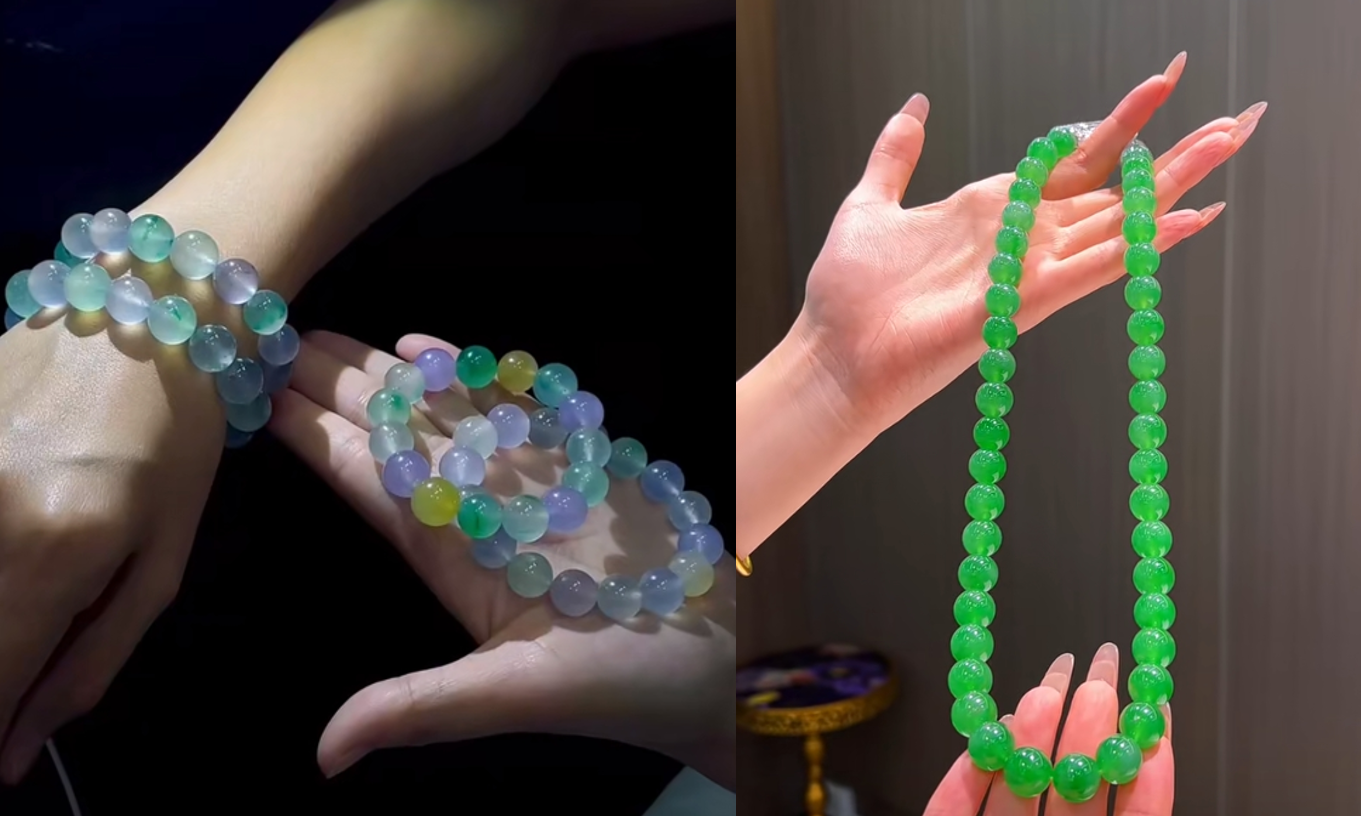
珠链 / 手串 (Zhūliàn / Shǒuchuàn) — Bead Necklace / Bead Bracelet
Jewelry made from multiple polished jadeite beads. High-quality matching strands require consistency in color, texture, transparency, size, and overall appearance.
挂件 (Guàjiàn) — Pendant
A jadeite piece designed to be worn as a pendant. It may be plain, shaped, or carved with a traditional subject.
雕件 (Diāojiàn) — Carved Piece
A jadeite piece shaped or carved into a subject, such as Guanyin, Buddha, dragon, phoenix, leaf, gourd, or landscape.
Part II. Nephrite Jade Terminology — 和田玉 / Nephrite
For nephrite, Chinese collectors often pay closer attention to texture, density, oiliness, warmth, structure, and natural character than simply transparency.
A. 玉质 — Material Quality
玉质 (Yùzhì) — Jade Quality / Material Character
A broad term describing the overall quality and character of nephrite.
It includes qualities such as fineness, density, texture, oiliness, warmth, and visual purity.
细腻 (Xìnì) — Fine / Fine-grained
Describes a nephrite material with a very fine and smooth internal structure.
细度 (Xìdù) — Fineness of Structure
Refers to how fine and compact the internal structure of the nephrite appears.
Fine 细度 is highly valued in quality nephrite.
油性 (Yóuxìng) — Oiliness
One of the most commonly used terms in Chinese nephrite collecting.
It describes the rich, smooth, oily visual and tactile quality of fine nephrite. It does not mean that the stone contains actual oil.
糯性 (Nuòxìng) — Waxy / Soft, Creamy Quality
A soft, rich, cohesive visual quality often associated with fine nephrite.
脂感 (Zhīgǎn) — Fat-like / Rich Luster
A warm, creamy visual quality, often used when describing high-quality white nephrite.
温润 (Wēnrùn) — Warm and Gentle Luster
One of the most important traditional qualities of Chinese jade.
It describes a jade that feels warm, smooth, gentle, and refined rather than overly bright or flashy.
白度 (Báidù) — Whiteness
The degree and quality of whiteness in white nephrite.
For high-end white nephrite, collectors consider not only how white the material is, but also its 细度、油性、脂感 and overall jade quality.
B. 和田玉颜色 — Nephrite Colors
羊脂白 (Yángzhī Bái) — Mutton-fat White
A traditional term for exceptionally fine white nephrite with a warm, creamy, rich appearance.
It is not simply “the whitest white.” The overall texture, fineness, oiliness, and warmth are also important.
白玉 (Bái Yù) — White Nephrite
White nephrite ranging from very pale white to warmer creamy tones.
青白玉 (Qīngbái Yù) — Bluish-White Nephrite
Nephrite with a subtle blue or gray-green undertone to its white color.
青玉 (Qīng Yù) — Greenish / Bluish-Green Nephrite
A broad category of darker greenish or bluish-green nephrite.
碧玉 (Bì Yù) — Green Nephrite
Green nephrite, ranging from lighter green to deep, saturated green.
墨玉 (Mò Yù) — Black Nephrite
Very dark nephrite, usually caused by a high concentration of dark inclusions or coloring material.
黄玉 (Huáng Yù) — Yellow Nephrite
Yellow to golden-colored nephrite. Fine natural yellow nephrite is relatively rare.
C. 和田玉器型 — Nephrite Forms
Many forms overlap with jadeite, but nephrite has an especially long carving tradition in China.
平安扣 — Ping An Kou
A simple circular form traditionally associated with peace, safety, and harmony.
无事牌 — Wushi Pai / Plain Plaque
A simple plaque with little or no decoration, allowing the natural jade material to become the focus.
玉牌 (Yùpái) — Jade Plaque
A broader term for a jade plaque, which may be plain or carved.
手镯 — Bangle
Nephrite bangle, usually made from a single piece of material.
手串 — Bead Bracelet
A bracelet made from multiple nephrite beads.
吊坠 / 挂件 — Pendant
A nephrite pendant or hanging ornament, either plain or carved.
玉佩 (Yùpèi) — Jade Pendant / Jade Ornament
A traditional Chinese jade ornament worn on the body, with a long cultural history.
雕件 — Carved Jade
A nephrite carving featuring a traditional or contemporary subject.
Part III. Xinjiang Hetian Single-Seed Jade — 和田玉籽料
This is where the language becomes particularly important for Hermit Jade, because single-seed jade has its own vocabulary that is not simply the same as ordinary nephrite terminology.
A. 籽料 — Seed Jade
籽料 (Zǐliào) — Seed Material / River-Worn Jade
Nephrite that has been naturally transported and shaped by water, traditionally referring to river-worn material from the Hetian region.
The natural shape, surface, skin, color, texture, and internal material are all important to collectors.
原籽 (Yuánzǐ) — Original Seed
A seed jade piece that retains its natural form rather than being heavily reshaped.
For collectors, 原籽 often emphasizes the preservation of the stone's natural character.
独籽 (Dúzǐ) — Single Seed
A single natural seed jade piece, rather than material assembled from several pieces or heavily reconstructed.
At Hermit Jade, this concept is especially important in our Lonely Stone collection.
B. 皮 — Natural Skin
皮 (Pí) — Natural Skin
The natural outer surface that develops on river-worn seed jade.
The skin is not simply a decorative layer. For collectors, it can provide information about the stone's natural history and can become an important part of its beauty and individuality.
真皮 (Zhēnpí) — Natural Skin
Natural skin that has not been artificially created or added.
聚皮 (Jùpí) — Concentrated Skin
Natural skin concentrated in a particular area of the seed jade.
洒金皮 (Sǎjīn Pí) — Scattered Golden Skin
A skin pattern with small golden-yellow or brownish-golden areas scattered across the surface.
枣红皮 (Zǎohóng Pí) — Jujube-red Skin
A deep reddish-brown natural skin color.
红皮 (Hóng Pí) — Red Skin
A reddish natural skin, ranging from lighter red-brown to deeper red tones.
黑皮 (Hēi Pí) — Black Skin
Dark or black natural skin.
秋梨皮 (Qiūlí Pí) — Autumn Pear Skin
A traditional term for a warm yellow-brown skin color resembling the skin of an autumn pear.
C. 肉 — The Inner Jade Material
肉 (Ròu) — Inner Material / “Flesh”
In Chinese jade terminology, 肉 refers to the actual nephrite material beneath the outer skin.
It is not literal flesh. Collectors use the term to distinguish the inner jade material from the outer skin.
For example:
皮色漂亮,肉质细腻。
Beautiful skin color, with fine and delicate inner material.
肉质 (Ròuzhì) — Quality of the Inner Material
Describes the quality, fineness, density, color, and texture of the jade inside the skin.
白肉 (Bái Ròu) — White Inner Material
White nephrite material beneath the skin.
细肉 (Xì Ròu) — Fine Inner Material
Very fine-grained and delicate inner material.
D. 皮色 — Natural Skin Colors
皮色 (Písè) — Skin Color
The natural color developed on the outer surface of seed jade.
Common terms include:
- 红皮 — Red skin
- 黄皮 — Yellow skin
- 洒金皮 — Scattered golden skin
- 枣红皮 — Jujube-red skin
- 黑皮 — Black skin
- 秋梨皮 — Autumn pear skin
For collectors, the beauty of 皮色 is not judged separately from the stone. The relationship between the skin, inner material, shape, texture, and overall natural condition is what makes a seed jade piece special.
E. Other Common Seed Jade Terms
毛孔 (Máokǒng) — Natural Surface Texture / “Pores”
Small natural surface features seen on the skin of river-worn seed jade.
Collectors may examine the surface texture and 毛孔 when considering whether the skin appears natural.
形 (Xíng) — Natural Form / Shape
The natural shape of the seed jade.
A beautiful and distinctive natural form can itself add to a piece's character and collectability.
完整度 (Wánzhěngdù) — Natural Integrity / Completeness
Describes how well the natural stone has been preserved, including its skin, form, and material condition.
裂 (Liè) — Crack / Fracture
A natural crack or fracture within the jade.
绺 (Liǔ) — Internal Line / Natural Structural Mark
A term commonly used by Chinese jade collectors for natural internal lines, fractures, or structural features.
棉 (Mián) — “Cotton”
Cloudy, fibrous, or cotton-like internal inclusions or structures visible within jade.
僵 (Jiāng) — Stony / Less-Jade-like Material
An area of material that appears harder, more stony, or less refined than the surrounding jade.
These features do not automatically make a piece undesirable. Collectors consider where they occur, how much they affect the stone, and how they interact with the overall material and design.
A Final Note on Jade Terminology
Chinese jade terminology is rich, but it is not always standardized. Many terms are traditional market and collector language rather than formal gemological grades. The same word may also be used slightly differently by different collectors, dealers, or regions.
For this reason, learning the vocabulary is only the beginning.
The real skill is learning how these qualities work together — how color interacts with transparency, how texture interacts with light, how skin relates to the inner material, and how natural character, craftsmanship, rarity, and condition come together in one piece.
That is the language of jade collecting.